The land that became Wollongong Airport has a history stretching back to 1817, when Governor Lachlan Macquarie granted 700 acres at Albion Park to early settler Andrew Allen. For more than a century it was farming country — cattle grazing, dairy, the Australian Illawarra Shorthorn. As early as the 1920s, aviators discovered that the flat terrain made a natural landing ground, using the paddocks for pleasure flights and demonstrations long before any formal airstrip existed.
The airstrip itself was built in 1942 by the Civil Construction Corps as a strategic RAAF pilot training base — its location chosen partly to protect the steelworks at Port Kembla. Airline services from Wollongong have been attempted on many occasions over the decades since, but have struggled to achieve sustainability. Many airline names have come and gone — each chapter adding to the Illawarra’s long aviation story.
Today
Current flights
Direct services to Melbourne and Brisbane, four times weekly.
View flights →About
About the airport
The Illawarra’s gateway to the world — key facts and mission.
About WOL →At the airport
HARS Aviation Museum
Australia’s most spectacular aviation collection — right here at WOL.
Explore HARS →1920s
The first aviators arrive
Open paddocks — Albion Park
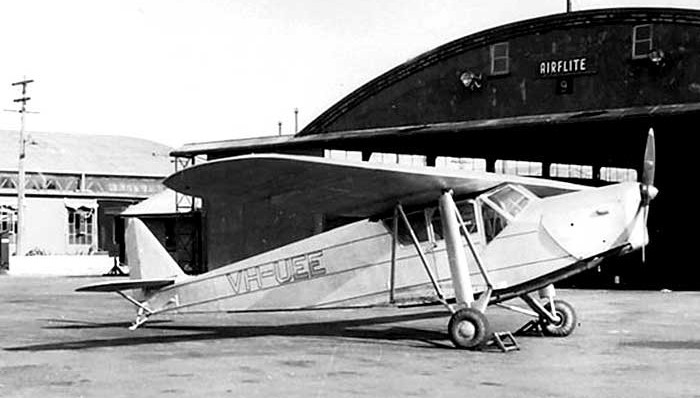
Long before any formal airstrip was constructed, early aviators discovered that the flat, open paddocks of Albion Park made a natural landing ground. From the 1920s, pilots used these fields for pleasure flights and aerial demonstrations — the first chapter of what would become a century of aviation in the Illawarra.
1942
RAAF Albion Park
Wartime RAAF pilot training base — Albion Park Rail
The Australian Government compulsorily acquired the land in 1942 to build RAAF Albion Park — a strategic pilot training base considered vital to the defence of the Illawarra, and particularly the steelworks at Port Kembla. A satellite airfield was also constructed north of Cordeaux Dam to support operations.
Among the pilots who trained at Albion Park was Clive “Killer” Caldwell — a local resident who went on to become Australia’s highest-scoring fighter ace of World War II, with 27½ confirmed kills across the North African and Pacific theatres. After the war, the airfield was transferred to civil management.
In 1946, Wollongong & South Coast Aviation Service Pty Ltd was founded by pioneering Illawarra aviator Walter E. James. Trans Australia Airlines and Australian National Airways soon linked the airport with Canberra and Melbourne — until 1950.
1952
South Coast Airways
Sydney · Wollongong · Bairnsdale · Sale · Melbourne
South Coast Airways operated a milk run between Sydney and Melbourne with intermediate stops in Wollongong, Bairnsdale and Sale — connecting the Illawarra to both capital cities.
1962
Council ownership
Airport transferred to Shellharbour Municipal Council
Under the Commonwealth Aerodrome Local Ownership Plan, ownership of the airfield was transferred to Shellharbour Municipal Council in 1962, giving the airport a permanent local home for the first time. Full operational responsibility transferred to council in 1990, when the first master plan for the airport was also prepared.
1970
A royal visit
Queen Elizabeth II and Prince Philip
Queen Elizabeth II and Prince Philip visited Albion Park Airport during their 1970 tour of Australia — one of the more remarkable moments in the airport’s history, and a mark of the Illawarra’s significance in the national story.
1970s – 1980s
Southbank Aviation
Wollongong · Newcastle · Canberra
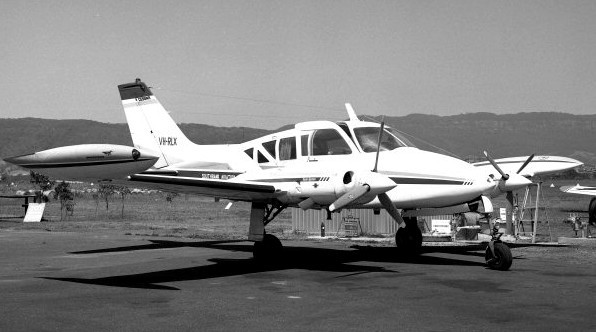
During the 1970s, Southbank Aviation introduced commuter services from Albion Park to Newcastle and Canberra, using a Cessna 320 Skynight.
1990s
Flight Facilities Airline
Wollongong · Canberra
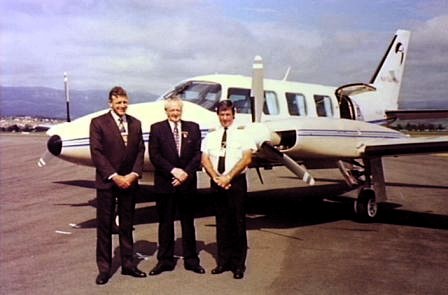
Flight Facilities continued regional connections through the 1990s, maintaining Wollongong’s link to the national capital.
1998 – 2000
Impulse Airlines
Wollongong · Melbourne · Newcastle
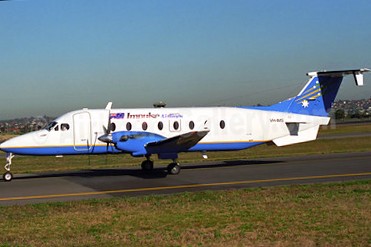
Impulse operated Beechcraft 1900D turboprop services to Melbourne and Newcastle, bringing commuter-style frequency to the Illawarra for the first time.
The story continues
The Illawarra’s aviation story is still being written.
Direct flights to Melbourne and Brisbane operate today — and the airport continues to grow as the Illawarra’s gateway to the world.
2005 – 2008
QantasLink
Wollongong · Melbourne
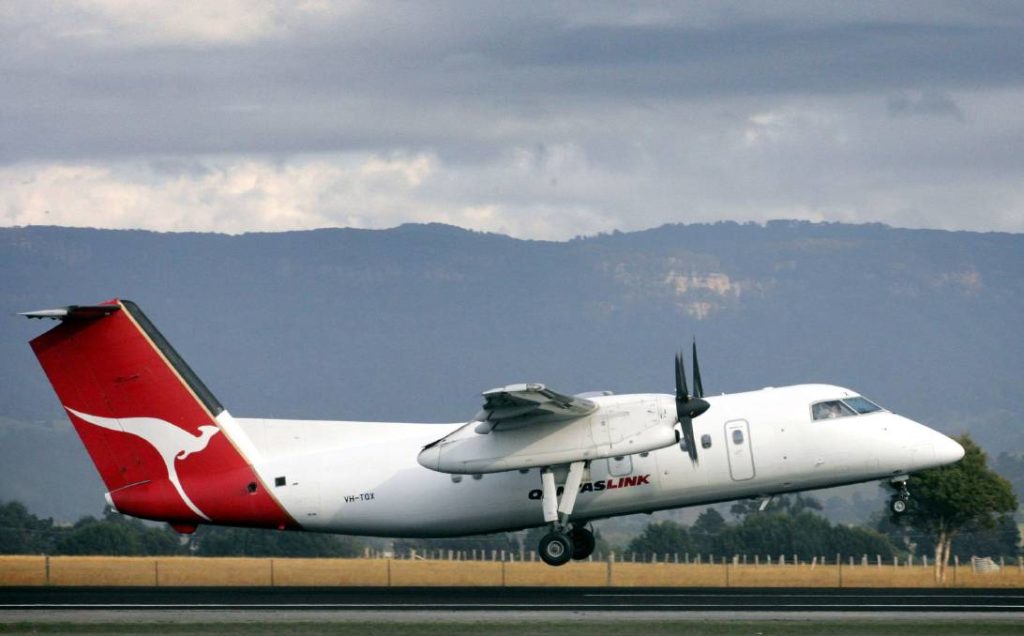
QantasLink brought Dash 8-100 services to Melbourne, the most significant airline operation the airport had seen. When QantasLink withdrew in 2008, the airport was left without any regular airline service for nearly ten years.
2008 – 2014
No regular airline services
Six years without scheduled RPT flights
With QantasLink’s withdrawal, the airport entered a quiet period. HARS continued to grow its collection and the airport invested in significant infrastructure — runway strengthening, enhanced security, lighting upgrades, and the development of the Shellharbour Light Aeronautics Industry Cluster. The stage was being set for what would come next.
8 March 2015
The 747 arrives — “City of Canberra”
Boeing 747-438 VH-OJA · Donated by Qantas to HARS
One of the most extraordinary events in the airport’s history — and in Australian aviation. VH-OJA, the first Qantas Boeing 747-400, landed at Wollongong Airport on 8 March 2015 after a 15-minute hop from Sydney. The 192-tonne aircraft landed on a runway rated for 25 tonnes — a feat that required four pilots to spend 25 hours in a flight simulator, Qantas to reduce tyre pressure from 208 to 120 psi, and Boeing to sign off on what had never been done before.
Thousands of spectators lined the surrounding hills, roads and vantage points to watch. “The things you can’t simulate are the crowds we could see on every vantage point — the hills and roads were just covered in people and cars,” said captain Ossie Miller. The aircraft pulled up well short of the runway end, leaving nothing but tyre marks on the tarmac. VH-OJA — “City of Canberra” — set the world record for longest non-stop commercial flight on its 1989 delivery flight from London to Sydney, a record that still stands. She now dominates the landscape at Wollongong Airport, her red and white Qantas tail visible from the surrounding suburbs.

October 2017 – May 2018
Jetgo
Wollongong · Melbourne · Brisbane
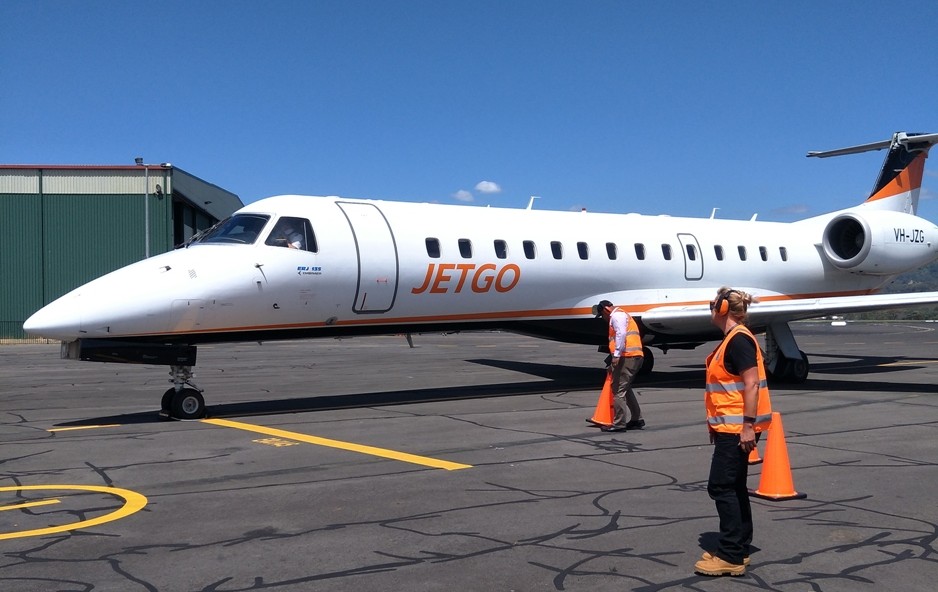
The launch of Jetgo services to Melbourne and Brisbane in October 2017 were hoped to be game changers. Using the most modern regional jets — ERJ135 and ERJ145 — this venture operated at a level previously unseen at Wollongong. Jetgo’s corporate collapse in May 2018 put an end to jet operations after only eight months.
Today
Link Airways — from November 2018
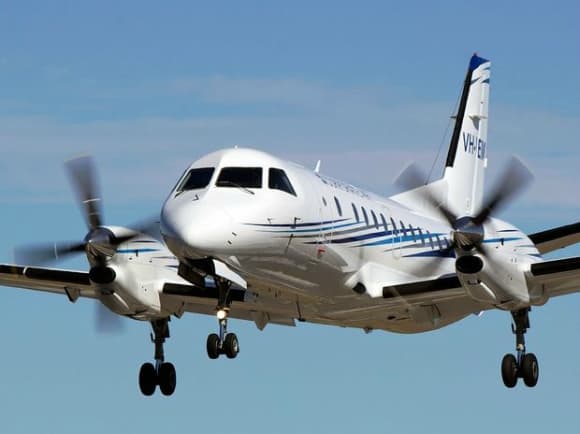
In September 2018, Canberra-based regional airline Fly Corporate (now operating as Link Airways) stepped into the routes vacated by Jetgo. Services commenced 12 November 2018 using 34-seat SAAB 340B aircraft. Five months later the airline increased frequencies, citing strong customer support.
In 2019, work began on more than $20 million of airport improvements — runway overlays and lighting, additional aircraft parking, and the foundations of an aviation business park. The centrepiece was a brand new passenger terminal, which opened in February 2021.
Later that year, the airport was named Australia’s best Small Regional RPT Airport at the Australian Airport Association National Airport Industry Awards — recognised for both its operational quality and its environmentally sustainable practices. Today, direct services to Melbourne and Brisbane operate four times weekly — Mon, Wed, Fri and Sun.
Book a flight today →